
MY STORY
I LEFT ACADEMIA.
I NEVER STOPPED BEING A RESEARCHER.
My work has always begun with one question:
What shapes a human life?
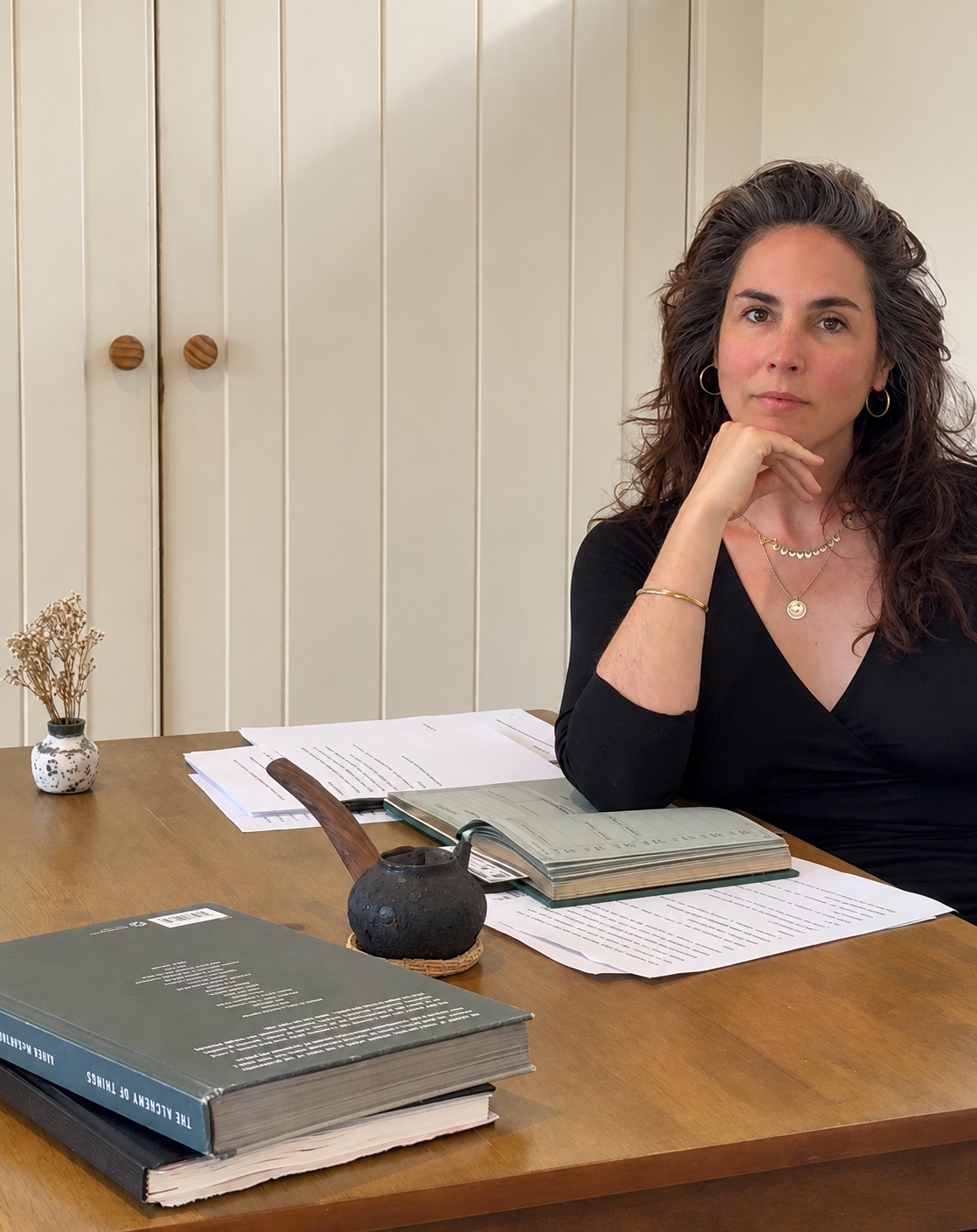
THE MACRO.
THE MICRO.
For years, I explored that question through social science, research and direct work with people.
Sociology gave me the macro lens.
It taught me to see the structures that surround and shape our lives culture, gender, power, family, social expectations and the roles we learn to inhabit.
Social Work gave me the micro lens.
It brought me closer to individual lives, families and relationships to the complexity of what happens behind closed doors, and to the ways larger social forces become intimate, relational and deeply personal.
FOUR YEARS IN DOCTORAL RESEARCH.
My academic path eventually led to four years of doctoral study.
I began in Social and Cultural Anthropology before continuing my doctoral research in Sociology, where I developed my work within the field of Social Exclusion. This period culminated in the presentation of my doctoral research thesis and the award of the Diploma of Advanced Studies (DEA), formally recognising my research proficiency.
Those years fundamentally shaped the way I think.
Research taught me to question assumptions.
To recognise patterns.
To look beyond what is immediately visible.
And to connect individual experience with the wider social forces that shape it.
THE RESEARCH
NEVER STOPPED.
My academic path eventually came to an unexpected end.
But the researcher in me never disappeared.
The inquiry continued.
Gender and sexuality deepened my understanding of women’s identity, autonomy, relationships and the roles we inherit.
Family mediation brought my attention to what happens between people communication, conflict, boundaries, needs and power.
Teaching taught me how to translate complexity: how to take ideas, frameworks and research and make them meaningful in another person’s lived experience.
But after years of studying society, culture, relationships and human behaviour, the direction of my inquiry began to shift.
FROM THE OUTSIDE
TO THE INSIDE.
I had spent years studying the structures that shape human experience from the outside.
Over time, I became increasingly interested in the structures we carry within us.
Not only what we think or believe, but what the body has learned through experience.
The ways we move.
The ways we relate.
The space we allow ourselves to occupy.
What we express, receive, resist or hold back.
Yoga and meditation brought me into direct experience. My training in Womb Hara Therapy deepened that inquiry, bringing my attention more fully into the female body and the ways experience is held, felt and expressed through it.
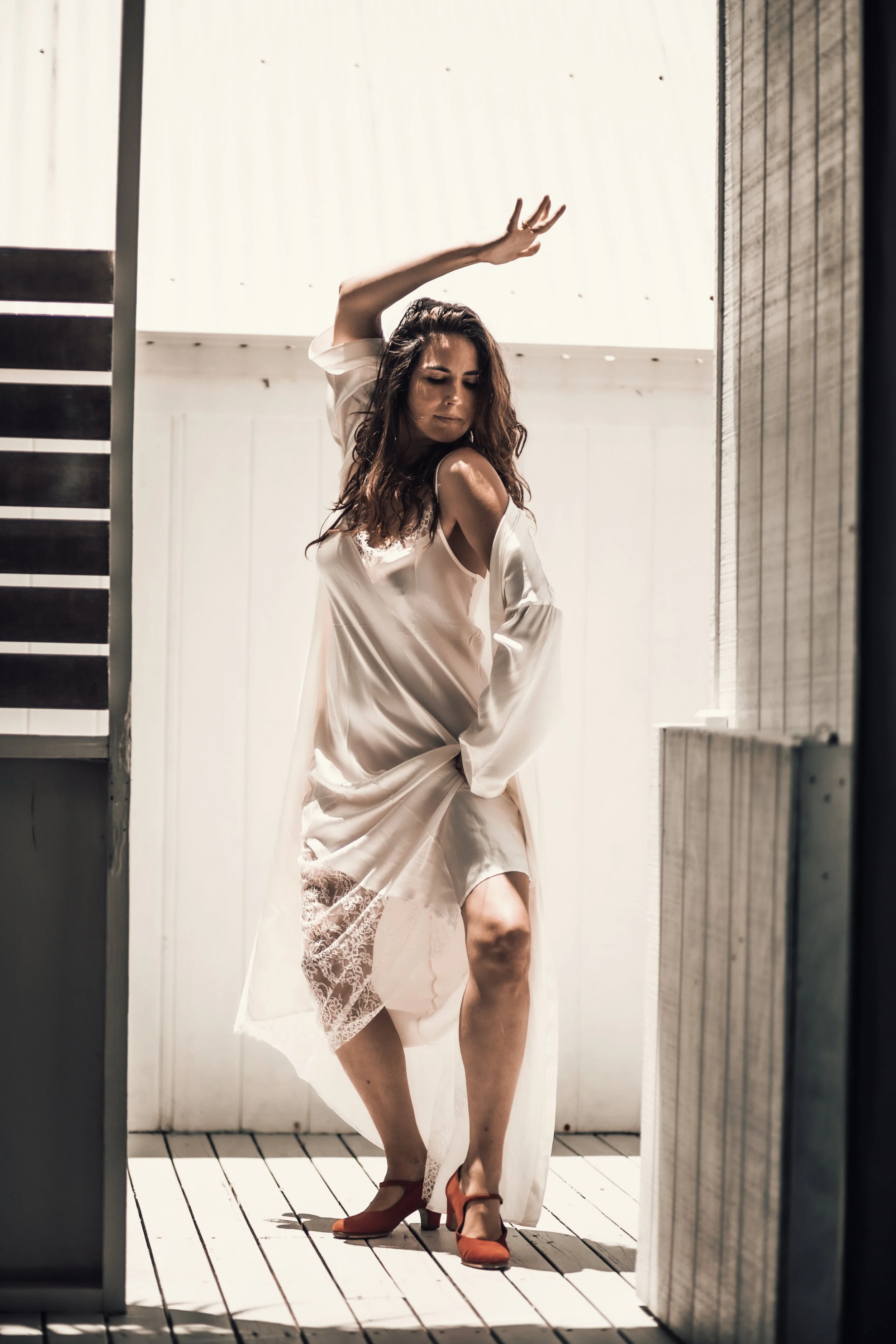
AND THEN CAME FLAMENCO.
I studied the form, but became increasingly interested in what its language could reveal beyond dance itself.
Weight. Rhythm. Presence. Direction.
Expression. Boundaries. Visibility.
Receiving. Belonging. Taking up space.
A new question began to emerge:
What becomes possible when something we understand intellectually can also be encountered, explored and experienced through the body?
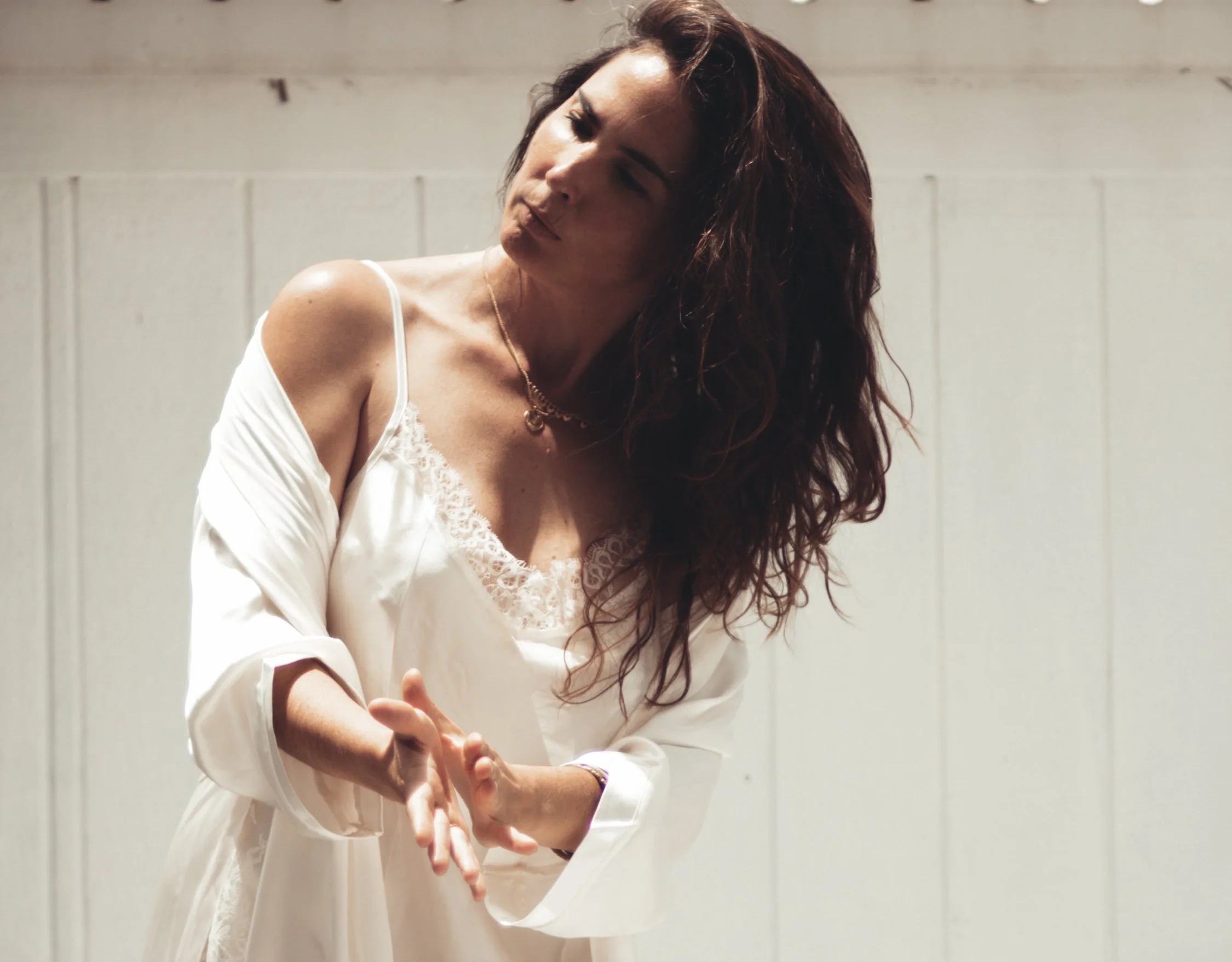
I NO LONGER SEE UNRELATED DISCIPLINES.
I SEE A PROGRESSION.
Sociology taught me to see the structures.
Social Work taught me to see the person within them.
Anthropology taught me to attend to culture, context and meaning.
Research taught me to question what appears obvious.
Gender studies taught me to examine what women inherit.
Family mediation taught me to understand what unfolds between people.
Teaching taught me how to translate complexity.
Somatic practice taught me to listen to the body.
And flamenco offered a language through which these worlds could meet.
This is where my work lives today:
at the intersection of social inquiry, embodied experience, artistic practice and human transformation.
Not as separate disciplines, but as different ways of approaching the same inquiry:
How are we shaped?
What becomes embodied?
And what becomes possible when we begin to experience ourselves differently?
I left academia. I never stopped researching.
The research simply moved
from society,
to relationships,
to the body.
And from understanding what shapes us
to exploring what else might be possible.